Tracked shipping to New Zealand with premium packaging for just NZ$15 

Ship to
New Zealand
0
  • argentina
  • chile
  • colombia
  • españa
  • méxico
  • perú
  • estados unidos
  • internacional

Select your country

Americas

Europe

Rest of the world

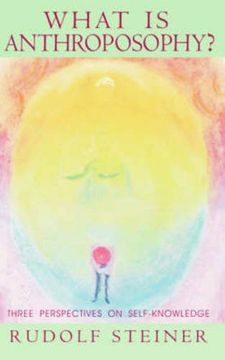
portada What is Anthroposophy?  Three Spiritual Perspectives on Self-Knowledge (Collected Works)
Type
Physical Book
Introduction by
Translated by
Publisher
Year
2002
Language
English
Pages
96
Format
Paperback
Dimensions
20.3x12.8x1.1 cm
Weight
0.14
ISBN
0880105062
ISBN13
9780880105064
Categories

What is Anthroposophy? Three Spiritual Perspectives on Self-Knowledge (Collected Works)

Rudolf Steiner (Author) · Christopher Bamford (Introduction by) · Mado Spiegler (Translated by) · Steiner Books · Paperback

What is Anthroposophy? Three Spiritual Perspectives on Self-Knowledge (Collected Works) - Rudolf Steiner

Cheaper New Book Imported to New Zealand
Delivery: 30 Nov - 08 Dec Shipping: 13 to 15 business days.
NZ$ 39.27
Faster New Book Imported to New Zealand
Delivery: 19 Nov - 27 Nov Shipping: 6 to 8 business days.
NZ$ 43.58
Import costs and 15% GST included in the price ✅
NZ$ 39.27

Synopsis "What is Anthroposophy? Three Spiritual Perspectives on Self-Knowledge (Collected Works)"

3 selected lectures by Rudolf Steiner This is one of those books that can change your life. Radical, thought-provoking, and indeed mind-boggling, it leads to a completely new way of looking at what it means to be human--a spiritual being in a universe that itself is not just physical, but psychic and spiritual as well. These three previously untranslated lectures are a masterly introduction to what Rudolf Steiner means by "Anthroposophy." They explain why Steiner describes this path--which means literally "the wisdom of the human being"--as one that "unites what is spiritual in the human being with what is spiritual in the universe." Steiner begins by describing what happens when we die. He shows the relationship between our physical life on Earth and the etheric, astral, and spiritual life of the cosmos. He also explains how physical lives are completely interwoven with cosmic existence, and how the "miss-ing links" in evolution are spiritual in nature. Steiner then demonstrates what he calls the "dilettantism" and "soullessness" of mainstream psychology. He points out that, since the second half of the nineteenth century, the idea of the soul has been lost and that, consequently, understanding of our inner lives is without a sure foundation. A very different view emerges, however, from a truly spiritual perspective. In the third lec-ture, Steiner takes as his guide our three states of being--waking, dreaming, and sleeping. He describes in detail what happens in these three states and how each is bound up with our lives as physical, psychic, and spiritual beings. With the profound insights in this book, the world becomes a much larger, richer, and more exciting place to live. CONTENTS Introduction by Christopher Bamford 1. The Physical Perspective2. The Psychological Perspective3. The Spiritual Perspective
Rudolf Steiner
  (Author)
View Author's Page
Rudolf Steiner (Donji Kraljevec, Austro-Hungarian Empire, now Croatia, February 25 or 27, 1861-Dornach, Switzerland, March 30, 1925) was an Austrian philosopher, literary scholar, educator, artist, playwright, social thinker, and occultist. He was the founder of anthroposophy, Waldorf education, biodynamic agriculture, anthroposophic medicine, and the new artistic form of eurythmy.

He described anthroposophy as follows: Anthroposophy is a path of knowledge that would like to lead the spiritual in man to the spiritual in the universe. Those who feel certain questions about the essence of man and the world as a vital necessity as the one felt when we are hungry and thirsty can be anthroposophists.

Steiner proposed a form of ethical individualism, to which he later added a more explicitly spiritual component. He derived his epistemology from the worldview of Johann Wolfgang Goethe, according to which thought is an organ of perception just like the eye or the ear. Just as the eye perceives colors and the ear sounds, so thought perceives ideas.
See more
See less

Customers reviews

Frequently Asked Questions about the Book

All books in our catalog are Original.
The book is written in English.
The binding of this edition is Paperback.

Questions and Answers about the Book

Do you have a question about the book? Login to be able to add your own question.

Opinions about Bookdelivery

More customer reviews