Tracked shipping to New Zealand with premium packaging for just NZ$15 

Ship to
New Zealand
0
  • argentina
  • chile
  • colombia
  • españa
  • méxico
  • perú
  • estados unidos
  • internacional

Select your country

Americas

Europe

Rest of the world

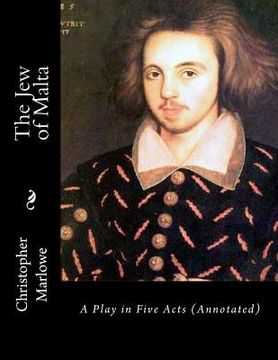
portada The Jew of Malta: A Play in Five Acts (Annotated)
Type
Physical Book
Illustrated by
Publisher
Language
English
Pages
104
Format
Paperback
Dimensions
28.0 x 21.6 x 0.6 cm
Weight
0.26 kg.
ISBN13
9781542379717

The Jew of Malta: A Play in Five Acts (Annotated)

Christopher Marlowe (Author) · Alexander Dyce (Illustrated by) · Createspace · Paperback

The Jew of Malta: A Play in Five Acts (Annotated) - Christopher Marlowe

New Book Imported to New Zealand
Delivery: 10 Sep - 22 Sep Shipping: 17 to 21 business days.
NZ$ 44.14
Import costs and 15% GST included in the price ✅
NZ$ 44.14

Synopsis "The Jew of Malta: A Play in Five Acts (Annotated)"

The Jew of Malta (originally spelled The Ievv of Malta) is a play by Christopher Marlowe, probably written in 1589 or 1590. The plot is an original story of religious conflict, intrigue, and revenge, set against a backdrop of the struggle for supremacy between Spain and the Ottoman Empire in the Mediterranean that takes place on the island of Malta. The title character, Barabas, dominates the play's action. There has been extensive debate about the play's portrayal of Jews and how Elizabethan audiences would have viewed it. The Jew of Malta is considered to have been a major influence on William Shakespeare's The Merchant of Venice. The play contains a prologue in which the character Machiavel, a Senecan ghost based on Niccolò Machiavelli, introduces "the tragedy of a Jew." Machiavel expresses the cynical view that power is amoral, saying "I count religion but a childish toy, /And hold there is no sin but ignorance." Barabas begins the play in his counting-house. Stripped of all he has for protesting the Governor of Malta's seizure of the wealth of the country's whole Jewish population to pay off the warring Turks, he develops a murderous streak by, with the help of his slave Ithamore, tricking the Governor's son and his friend into fighting over the affections of his daughter, Abigail. When they both die in a duel, he becomes further incensed when Abigail, horrified at what her father has done, runs away to become a Christian nun. In retribution, Barabas then goes on to poison her along with the whole of the nunnery, strangles an old friar (Barnadine) who tries to make him repent for his sins and then frames another friar (Jacomo) for the first friar's murder. After Ithamore falls in love with a prostitute who conspires with her criminal friend to blackmail and expose him (after Ithamore drunkenly tells them everything his master has done), Barabas poisons all three of them. When he is caught, he drinks "of poppy and cold mandrake juice" so that he will be left for dead, and then plots with the enemy Turks to besiege the city. When at last Barabas is nominated governor by his new allies, he switches sides to the Christians once again. Having devised a trap for the Turks' galley slaves and soldiers in which they will all be demolished by gunpowder, he then sets a trap for the Turkish prince himself and his men, hoping to boil them alive in a hidden cauldron. Just at the right moment, however, the former governor emerges and causes Barabas to fall into his own trap. He dies, but not before the Turkish army has indeed been demolished according to his plans, thus delivering the Turkish prince into the hands of the Christians and revealing them to be every bit as scheming and hypocritical as the Jew they had condemned. (Annotated)
Christopher Marlowe
  (Author)
View Author's Page
Christopher Marlowe (1564-1593) was an Elizabethan playwright, poet, and translator. His life remains a great mystery surrounded by all sorts of legends. He was born in Canterbury the same year as William Shakespeare into a prosperous middle-class family. He studied at Corpus Christi College, Cambridge, where he earned a Bachelor of Arts in 1584 and completed his Master's in 1587. Initially, Cambridge authorities were reluctant to grant him the degree because they suspected he had converted to Catholicism, but the Queen's Privy Council intervened on his behalf, emphasizing that Marlowe "had rendered good service to Her Majesty" and had been working for the "benefit of the country." However, the exact nature of the service he provided to the crown is unknown. After his years in Cambridge, Marlowe moved to London where he led a dark and turbulent life (he had a couple of run-ins with the law and had a bad reputation) while trying to make his way as a playwright.

He is the author of seven plays and an incomplete poem: the two parts of Tamburlaine the Great, The Jew of Malta, Edward II, Doctor Faustus, Dido, Queen of Carthage, and The Massacre at Paris, as well as the poem Hero and Leander. In 1593, at just twenty-nine years old, he was arrested and accused of being an atheist. He did not go to prison, and before his case was judged, he died during a brawl in a tavern in Deptford.
See more
See less

Customers reviews

Frequently Asked Questions about the Book

All books in our catalog are Original.
The book is written in English.
The binding of this edition is Paperback.

Questions and Answers about the Book

Do you have a question about the book? Login to be able to add your own question.

Opinions about Bookdelivery

More customer reviews