Tracked shipping to New Zealand with premium packaging for just NZ$15 

Ship to
New Zealand
0
  • argentina
  • chile
  • colombia
  • españa
  • méxico
  • perú
  • estados unidos
  • internacional

Select your country

Americas

Europe

Rest of the world

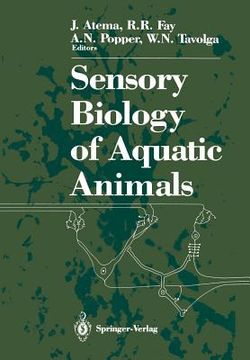
portada Sensory Biology of Aquatic Animals
Type
Physical Book
Publisher
Language
English
Pages
936
Format
Paperback
Dimensions
24.4 x 17.0 x 4.9 cm
Weight
1.54 kg.
ISBN13
9781461283171

Sensory Biology of Aquatic Animals

1987, Jelle ; Fay, Richard R. ; Tavolga, William N. (Author) · Springer · Paperback

Sensory Biology of Aquatic Animals - 1987, Jelle ; Fay, Richard R. ; Tavolga, William N.

Cheaper New Book Imported to New Zealand
Delivery: 17 Jul - 29 Jul Shipping: 12 to 16 business days.
NZ$ 316.74
Faster New Book Imported to New Zealand
Delivery: 07 Jul - 14 Jul Shipping: 4 to 5 business days.
NZ$ 400.40
Import costs and 15% GST included in the price ✅
NZ$ 316.74

Synopsis "Sensory Biology of Aquatic Animals"

This volume constitutes a series of invited chapters based on presentations given at an International Conference on the Sensory Biology of Aquatic Animals held June 24-28, 1985 at the Mote Marine Laboratory in Sarasota, Florida. The immediate purpose of the conference was to spark an exchange of ideas, concepts, and techniques among investigators concerned with the different sensory modalities employed by a wide variety of animal species in extracting information from the aquatic environment. By necessity, most investigators of sensory biology are specialists in one sensory system: different stimulus modalities require different methods of stimulus control and, generally, different animal models. Yet, it is clear that all sensory systems have principles in common, such as stimulus filtering by peripheral structures, tuning of receptor cells, signal-to-noise ratios, adaption and disadaptation, and effective dynamic range. Other features, such as hormonal and efferent neural control, circadian reorganization, and receptor recycling are known in some and not in other senses. The conference afforded an increased awareness of new discoveries in other sensory systems that has effectively inspired a fresh look by the various participants at their own area of specialization to see whether or not similar principles apply. This inspiration was found not only in theoretical issues, but equally in techniques and methods of approach. The myopy of sensory specialization was broken in one unexpected way by showing limitations of individual sense organs and their integration within each organism. For instance, studying vision, one generally chooses a visual animal as a model.

Customers reviews

Frequently Asked Questions about the Book

All books in our catalog are Original.
The book is written in English.
The binding of this edition is Paperback.

Questions and Answers about the Book

Do you have a question about the book? Login to be able to add your own question.

Opinions about Bookdelivery

More customer reviews