Tracked shipping to New Zealand with premium packaging for just NZ$15 

Ship to
New Zealand
0
  • argentina
  • chile
  • colombia
  • españa
  • méxico
  • perú
  • estados unidos
  • internacional

Select your country

Americas

Europe

Rest of the world

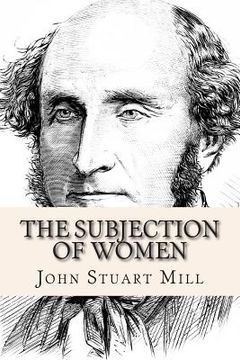
portada The Subjection of Women
Type
Physical Book
Publisher
Language
English
Pages
104
Format
Paperback
Dimensions
22.9x15.2x0.6 cm
Weight
0.15 kg.
ISBN13
9781503076051

The Subjection of Women

John Stuart Mill (Author) · Createspace · Paperback

The Subjection of Women - John Stuart Mill

New Book Imported to New Zealand
Delivery: 30 Dec - 12 Jan Shipping: 17 to 21 business days.
NZ$ 38.25
Import costs and 15% GST included in the price ✅
NZ$ 38.25

Synopsis "The Subjection of Women"

The Subjection of Women is an essay by English philosopher, political economist and civil servant John Stuart Mill published in 1869, with ideas he developed jointly with his wife Harriet Taylor Mill. Mill submitted the finished manuscript of their collaborative work On Liberty (1859) soon after her untimely death in late 1858, and then continued work on The Subjection of Women until its completion in 1861. At the time of its publication, the essay's argument for equality between the sexes was an affront to European conventional norms regarding the status of men and women. In his Autobiography, Mill describes his indebtedness to his wife and her daughter Helen Taylor for the creation of The Subjection of Women: As ultimately published it was enriched with some important ideas of my daughter's and some passages of her writing. But all that is most striking and profound in what was written by me belongs to my wife, coming from the fund of thought that had been made common to us both by our innumerable conversations and discussions on a topic that filled so large a place in our minds. While scholars generally agree that John Stuart Mill was the sole author, it is also noted that some of the arguments are similar to Harriet Taylor Mill's essay The Enfranchisement of Women, which was published in 1851. Mill was convinced that the moral and intellectual advancement of humankind would result in greater happiness for everybody. He asserted that the higher pleasures of the intellect yielded far greater happiness than the lower pleasure of the senses. He conceived of human beings as morally and intellectually capable of being educated and civilised. Mill believed everyone should have the right to vote, with the only exceptions being barbarians and uneducated people. Mill argues that people should be able to vote to defend their own rights and to learn to stand on their two feet, morally and intellectually. This argument is applied to both men and women. Mill often used his position as a member of Parliament to demand the vote for women, a controversial position for the time. In Mill's time a woman was generally subject to the whims of her husband and/or father due to social norms which said women were both physically and mentally less able than men and therefore needed to be "taken care of." Contributing to this view were both hierarchical religious views of men and women within the family and social theories based on biological determinism. The archetype of the ideal woman as mother, wife and homemaker was a powerful idea in 19th century society.
John Stuart Mill
  (Author)
View Author's Page
John Stuart Mill (1806-1873) was a British philosopher, economist, and politician, considered a key figure in liberalism and utilitarianism. Influenced by Jeremy Bentham and his father, James Mill, he wrote extensively on freedom, economy, and social justice. Among his most notable works are On Liberty (1859), where he defends individual rights against state control, and Utilitarianism (1863), where he develops this philosophical current.

His work also covered political economy with Principles of Political Economy (1848) and the philosophy of law with Representative Government (1861). Additionally, in The Subjection of Women (1869) he advocated for gender equality. His thinking continues to influence contemporary political philosophy and social theory.
See more
See less

Customers reviews

Frequently Asked Questions about the Book

All books in our catalog are Original.
The book is written in English.
The binding of this edition is Paperback.

Questions and Answers about the Book

Do you have a question about the book? Login to be able to add your own question.

Opinions about Bookdelivery

More customer reviews