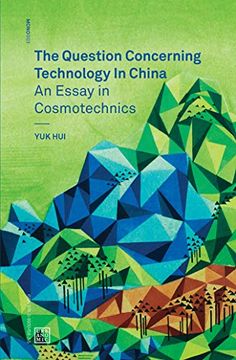
The Question Concerning Technology in China: An Essay in Cosmotechnics (Urbanomic
Yuk Hui
Synopsis "The Question Concerning Technology in China: An Essay in Cosmotechnics (Urbanomic "
A systematic historical survey of Chinese thought is followed by an investigation of the historical-metaphysical questions of modern technology, asking how Chinese thought might contribute to a renewed questioning of globalized technics. Heidegger's critique of modern technology and its relation to metaphysics has been widely accepted in the East. Yet the conception that there is only one-originally Greek-type of technics has been an obstacle to any original critical thinking of technology in modern Chinese thought. Yuk Hui argues for the urgency of imagining a specifically Chinese philosophy of technology capable of responding to Heidegger's challenge, while problematizing the affirmation of technics and technologies as anthropologically universal. This investigation of the historical-metaphysical question of technology, drawing on Lyotard, Simondon, and Stiegler, and introducing a history of modern Eastern philosophical thinking largely unknown to Western readers, including philosophers such as Feng Youlan, Mou Zongsan, and Keiji Nishitani, sheds new light on the obscurity of the question of technology in China. Why was technics never thematized in Chinese thought? Why has time never been a real question for Chinese philosophy? How was the traditional concept of Qi transformed in its relation to Dao as China welcomed technological modernity and westernization? In The Question Concerning Technology in China, a systematic historical survey of the major concepts of traditional Chinese thinking is followed by a startlingly original investigation of these questions, in order to ask how Chinese thought might today contribute to a renewed, cosmotechnical questioning of globalized technics.
Yuk Hui (許煜) es un filósofo hongkonés especializado en filosofía de la tecnología y pensamiento contemporáneo. Formado en ingeniería informática en la Universidad de Hong Kong y doctorado en filosofía en Goldsmiths, Universidad de Londres, desarrolló su investigación bajo la influencia del filósofo Bernard Stiegler. A lo largo de su carrera académica ha enseñado en diversas universidades europeas y asiáticas, y se ha consolidado como una de las voces más influyentes en el debate actual sobre tecnología, cultura y sociedad. Su trabajo explora la relación entre sistemas técnicos, historia del pensamiento y transformación digital.
Entre sus obras más conocidas se encuentran On the Existence of Digital Objects, The Question Concerning Technology in China: An Essay in Cosmotechnics, Recursivity and Contingency, Art and Cosmotechnics y Máquina y soberanía. En estos textos desarrolla conceptos como cosmotécnica y tecnodiversidad, con los que propone repensar la tecnología más allá de una visión universal dominada por la modernidad occidental. En Máquina y soberanía examina el impacto político y filosófico de la tecnología contemporánea y plantea la necesidad de un pensamiento “planetario” capaz de afrontar desafíos como la inteligencia artificial, las crisis ecológicas y los nuevos conflictos globales.