Tracked shipping to New Zealand with premium packaging for just NZ$15 

Ship to
New Zealand
0
  • argentina
  • chile
  • colombia
  • españa
  • méxico
  • perú
  • estados unidos
  • internacional

Select your country

Americas

Europe

Rest of the world

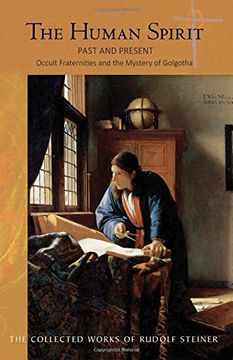
portada The Human Spirit Past and Present: Occult Fraternities and the Mystery of Golgotha (Cw 167)
Type
Physical Book
Introduction by
Translated by
Language
English
Pages
304
Format
Paperback
Dimensions
23.1 x 15.2 x 2.5 cm
Weight
0.48 kg.
ISBN13
9781855845220

The Human Spirit Past and Present: Occult Fraternities and the Mystery of Golgotha (Cw 167)

Rudolf Steiner (Author) · Matthew Barton (Introduction by, Translated by) · Rudolf Steiner Press · Paperback

The Human Spirit Past and Present: Occult Fraternities and the Mystery of Golgotha (Cw 167) - Steiner, Rudolf ; Barton, Matthew ; Barton, Matthew

New Book Imported to New Zealand
Delivery: 13 Aug - 19 Aug Shipping: 3 to 3 business days.
NZ$ 60.82
Import costs and 15% GST included in the price ✅
NZ$ 60.82

Synopsis "The Human Spirit Past and Present: Occult Fraternities and the Mystery of Golgotha (Cw 167)"

12 lectures, Berlin, February 13-May 30, 1916 (CW 167)"To live in truth, to wish to be true in one's whole being, will be the watchword of the future." --Rudolf SteinerAmid the lies and propaganda of World War I, Rudolf Steiner struggled to convey the truths of the human spirit. The "truth" asserted by partisan interests, he suggests, is invariably tinged with dishonesty--whether by the outright mendacities of politicians and rulers (Steiner refers here to machinations of the British Empire), or by the manipulative techniques of secret societies intent on securing and shoring up their power.Speaking of secret societies, Steiner highlights how, whereas we tend to reject overt authority today, we also succumb more easily to its covert forms in the "received wisdom" we often adopt unthinkingly. In seeking to help his audiences discern the spiritual struggle unfolding behind outer events, Steiner describes how the intrigues that led to the war were based on intentional deceit that served hidden aims hidden mostly from the general public.In contrast to the divisiveness of lies, truth is based on realizing the interconnectedness of all things--interdependence between the realms "below" and "above." The "I," upon which all evolution on Earth is predicated, signifies victory over egoism and narrow self-interest, together with our imaginative embrace of all beings. Its spiritual reality--which descends to us from non-material worlds and toward which we evolve through our earthly lives--is the supreme truth.In addition to his many other topics, Rudolf Steiner speaks about The Qur'an and the Mystery of Golgotha; Henry VIII, Thomas More, and the Church of England; the Jesuits and their State in Paraguay; Freemasons, esoteric symbols, and secret handshakes; Madame Blavatsky's occult imprisonment by Anglo-Saxon brotherhoods; Dostoyevsky's Brothers Karamazov; and the occult literature of Papus and Lévi.This volume is a translation from German of Gegenwärtiges und Vergangenes im Menschengeiste (GA 167).
Rudolf Steiner
  (Author)
View Author's Page
Rudolf Steiner (Donji Kraljevec, Austro-Hungarian Empire, now Croatia, February 25 or 27, 1861-Dornach, Switzerland, March 30, 1925) was an Austrian philosopher, literary scholar, educator, artist, playwright, social thinker, and occultist. He was the founder of anthroposophy, Waldorf education, biodynamic agriculture, anthroposophic medicine, and the new artistic form of eurythmy.

He described anthroposophy as follows: Anthroposophy is a path of knowledge that would like to lead the spiritual in man to the spiritual in the universe. Those who feel certain questions about the essence of man and the world as a vital necessity as the one felt when we are hungry and thirsty can be anthroposophists.

Steiner proposed a form of ethical individualism, to which he later added a more explicitly spiritual component. He derived his epistemology from the worldview of Johann Wolfgang Goethe, according to which thought is an organ of perception just like the eye or the ear. Just as the eye perceives colors and the ear sounds, so thought perceives ideas.
See more
See less

Customers reviews

Frequently Asked Questions about the Book

All books in our catalog are Original.
The book is written in English.
The binding of this edition is Paperback.

Questions and Answers about the Book

Do you have a question about the book? Login to be able to add your own question.

Opinions about Bookdelivery

More customer reviews