Tracked shipping to New Zealand with premium packaging for just NZ$15 

Ship to
New Zealand
0
  • argentina
  • chile
  • colombia
  • españa
  • méxico
  • perú
  • estados unidos
  • internacional

Select your country

Americas

Europe

Rest of the world

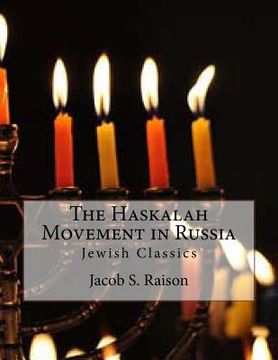
portada The Haskalah Movement in Russia: Jewish Classics
Type
Physical Book
Publisher
Language
English
Pages
120
Format
Paperback
Dimensions
28.0 x 21.6 x 0.6 cm
Weight
0.29 kg.
ISBN13
9781534834989

The Haskalah Movement in Russia: Jewish Classics

Jacob S. Raison Ph. D. (Author) · Createspace · Paperback

The Haskalah Movement in Russia: Jewish Classics - Raison Ph. D., Jacob S.

New Book Imported to New Zealand
Delivery: 10 Sep - 22 Sep Shipping: 16 to 20 business days.
NZ$ 43.93
Import costs and 15% GST included in the price ✅
NZ$ 43.93

Synopsis "The Haskalah Movement in Russia: Jewish Classics"

The Haskalah, often termed Jewish Enlightenment (Literally, "wisdom", "erudition") was an intellectual movement among the Jews of Central and Eastern Europe, with certain influence on those at the West and Muslim lands. It arose as a defined ideological worldview during the 1770's, and its last stage ended around 1881, with the rise of Jewish nationalism. The Haskalah pursued two complementary aims. It sought to preserve the Jews as a separate, unique collective and worked for a cultural and moral renewal, especially a revival of Hebrew for secular purposes, pioneering the modern press and literature in the language. Concurrently, it strove for an optimal integration of the Jews in surrounding societies, including the study of native vernaculars, adoption of modern values, culture and appearance, all combined with economic productivization. The Haskalah promoted rationalism, liberalism, freedom of thought and enquiry, and is largely perceived as the Jewish variant of the general Enlightenment. The movement encompassed a wide spectrum ranging from moderates, who hoped for maximal compromise and conservatism, to radicals who sought sweeping changes. In its various changes, the Haskalah fulfilled an important, though limited, part in the modernization of Central and Eastern European Jews. Its activists, the maskilim, urged for and implemented communal, educational and cultural reforms both in the public and the private spheres. Owing to its dualistic policies, it collided both with the traditionalist rabbinic elite, which attempted to preserve old Jewish values and norms in their entirety, and the radical assimilationists who wished to eliminate or minimize the existence of the Jews as a defined collective.

Customers reviews

Frequently Asked Questions about the Book

All books in our catalog are Original.
The book is written in English.
The binding of this edition is Paperback.

Questions and Answers about the Book

Do you have a question about the book? Login to be able to add your own question.

Opinions about Bookdelivery

More customer reviews