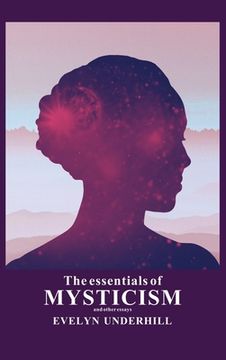
Synopsis "The essentials of Mysticism: And other essays"
Evelyn Underhill was one of the greatest spiritual writers of the twentieth century. Her legacy as a pivotal figure in Christian mysticism endures today. For her, true mysticism is first of all active and practical, an organic life process in which the whole self is engaged, rather than simply an intellectual apprehension. Underhill's essays on the topic merits a reexamination since it is still used in most courses that explore the experience of God called mysticism and still attracts contemporary spiritual seekers."What are the true essentials of mysticism? When we have stripped off those features which some mystics accept and some reject - all that is merely due to tradition, temperament or unconscious allegorism - what do we find as the necessary and abiding character of all true mystical experience? This question is really worth asking. For some time much attention has been given to the historical side of mysticism, and some - much less - to its practice. But there has been no clear understanding of the difference between its substance and its accidents: between traditional forms and methods, and the eternal experience which they have mediated. In mystical literature words are frequently confused with things, and symbols with realities; so that much of this literature seems to the reader to refer to some self-consistent and exclusive dream-world, and not to the achievement of universal truth. Thus the strong need for re-statement which is being felt by institutional religion, the necessity of re-translating its truths into symbolism which modern men can understand and accept, applies with at least equal force to mysticism. It has become important to disentangle the facts from ancient formulae used to express them."Contents: THE ESSENTIALS OF MYSTICISM THE MYSTIC AND THE CORPORATE LIFEMYSTICISM AND THE DOCTRINE OF ATONEMENTTHE MYSTIC AS CREATIVE ARTISTTHE EDUCATION OF THE SPIRITTHE PLACE OF WILL, INTELLECT AND FEELING IN PRAYER THE MYSTICISM OF PLOTINUS THREE MEDIAEVAL MYSTICS THE MIRROR OF SIMPLE SOULS THE BLESSED ANGELA OF FOLIGNOJULIAN OF NORWICH MYSTICISM IN MODERN FRANCE SOEUR THÉRÈSE DE L'ENFANT-JÉSUS LUCIE-CHRISTINECHARLES PÉGUY
Nació en Wolverhampton, Inglaterra, en 1875. Recibió una esmerada educación privada y asistió al King´s College para mujeres (Londres), donde estudió letras, historia, botánica y filosofía. Crecida en el agnosticismo, en 1907, durante una breve estancia en un convento franciscano, tiene lugar su conversión espiritual. A pesar de estar convencida de que la religión católica era la verdadera, diversas circunstancias impiden su adhesión a la Iglesia católica, y en 1921 optará finalmente por una pertenencia practicante al anglicanismo. En 1911, a raíz de la preparación y publicación de su obra fundamental La mística, conoce al barón Friedrich von Hügel, al que convertirá en su director espiritual; él influirá grandemente en su pensamiento y en su práctica religiosa. Repartió su actividad entre la escritura y la vida de devoción, asumiendo la dirección de retiros e impartiendo charlas y conferencias, dedicaciones que harán de ella unas de las maestras espirituales más importantes de su tiempo.
Autora de tres novelas y dos libros de poemas, destacan sus trabajos sobre mística y espiritualidad, que comprenden ediciones y comentarios de místicos y obras clásicas como Ruysbroeck, Walter Hilton, La Nube del no Saber o La Escala de Perfección. Entre sus numerosos libros cabe mencionar The Mystic Way: A Psychological Study in Christian Origins (1913), The Life of the Spirit and the Life of Today (1922), The Mystics of the Church (1925), Worship (1936), La práctica del misticismo (2015) y La mística (2ª edición en 2016), publicados en esta editorial.