Tracked shipping to New Zealand with premium packaging for just NZ$15 

Ship to
New Zealand
0
  • argentina
  • chile
  • colombia
  • españa
  • méxico
  • perú
  • estados unidos
  • internacional

Select your country

Americas

Europe

Rest of the world

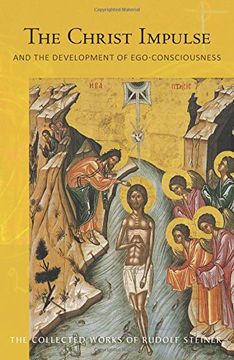
portada The Christ Impulse: And the Development of Ego-Consciousness (Cw 116)
Type
Physical Book
Introduction by
Translated by
Language
English
Pages
184
Format
Paperback
Dimensions
23.1 x 15.2 x 1.5 cm
Weight
0.29 kg.
ISBN13
9781855844063

The Christ Impulse: And the Development of Ego-Consciousness (Cw 116)

Rudolf Steiner (Author) · Christian Von Arnim (Introduction by, Translated by) · Rudolf Steiner Press · Paperback

The Christ Impulse: And the Development of Ego-Consciousness (Cw 116) - Steiner, Rudolf ; Von Arnim, Christian ; Von Arnim, Christian
New Book Imported to New Zealand
Delivery: 31 Jul - 06 Aug Shipping: 2 to 2 business days.
NZ$ 47.48
Import costs and 15% GST included in the price ✅
NZ$ 47.48

Synopsis "The Christ Impulse: And the Development of Ego-Consciousness (Cw 116)"

7 lectures, Berlin, Oct.-May 1909 (CW 116)"Christ will reappear but in a higher reality than the physical one--in a reality tht we will see only if we have first acquired a sense and understanding of spiritual life. Inscribe in your hearts what Anthroposophy should be--preparation for the great epoch of humanity that lies ahead of us." -- Rudolf SteinerRudolf Steiner's teachings of Christ--and in particular what he calls the "Christ impulse"--are unique. Christ, he says, is an objective universal force that exists independently of Christian churches and creeds, working for all humanity. The impulse that Christ brought to Earth acts to advance all people, irrespective of religion, creed, or race.Speaking in Berlin while still a representative of the largely Eastern-oriented Theosophical Society, Steiner presents multifaceted perspectives on the Christ impulse based on his independent spiritual research--from the vast cycles of time that preceded Christ's incarnation and the preparation for his coming to the actual physical embodiment of Christ about two thousand years ago in Palestine as Jesus of Nazareth. Steiner also describes how Christ will influence the future development of the Earth and humanity.In his opening lecture, Steiner discusses the nature of the bodhisattvas and their role in relation to Christ and human evolution. Bodhisattvas are the great teachers of humanity, incarnating in human form during their passage through the various cycles of cultural development. They are intimately involved in preparing the work of the Christ impulse. In other lectures Steiner addresses subjects as diverse as the Sermon on the Mount in relation to the development of conscience and the current duality of male and female (microcosm) and its correspondence in the cosmos (macrocosm). This microcosmic-macrocosmic phenomenon is related to initiation in the Germanic and Egyptian mysteries, which reach a higher unity in Christian initiation.Among the myriad other themes are the introduction of the "I" in human development and its essential connection to Christ; the preparation of the Christ impulse through the Jahveh religion and Mosaic law; the meaning of the Ten Commandments; and the new clairvoyance in relation to the reappearance of Christ in the etheric.This volume is a translation from German of Der Christus-Impuls und die Entwicklung des Ich-Bewu tseins (GA 116).
Rudolf Steiner
  (Author)
View Author's Page
Rudolf Steiner (Donji Kraljevec, Austro-Hungarian Empire, now Croatia, February 25 or 27, 1861-Dornach, Switzerland, March 30, 1925) was an Austrian philosopher, literary scholar, educator, artist, playwright, social thinker, and occultist. He was the founder of anthroposophy, Waldorf education, biodynamic agriculture, anthroposophic medicine, and the new artistic form of eurythmy.

He described anthroposophy as follows: Anthroposophy is a path of knowledge that would like to lead the spiritual in man to the spiritual in the universe. Those who feel certain questions about the essence of man and the world as a vital necessity as the one felt when we are hungry and thirsty can be anthroposophists.

Steiner proposed a form of ethical individualism, to which he later added a more explicitly spiritual component. He derived his epistemology from the worldview of Johann Wolfgang Goethe, according to which thought is an organ of perception just like the eye or the ear. Just as the eye perceives colors and the ear sounds, so thought perceives ideas.
See more
See less

Customers reviews

Frequently Asked Questions about the Book

All books in our catalog are Original.
The book is written in English.
The binding of this edition is Paperback.

Questions and Answers about the Book

Do you have a question about the book? Login to be able to add your own question.

Opinions about Bookdelivery

More customer reviews