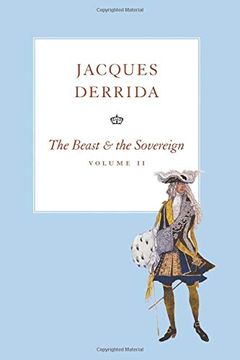
The Beast and the Sovereign, Volume ii (The Seminars of Jacques Derrida)
Jacques Derrida
Synopsis "The Beast and the Sovereign, Volume ii (The Seminars of Jacques Derrida) "
Following on from The Beast and the Sovereign, Volume I, this book extends Jacques Derrida’s exploration of the connections between animality and sovereignty. In this second year of the seminar, originally presented in 2002–2003 as the last course he would give before his death, Derrida focuses on two markedly different texts: Heidegger’s 1929–1930 course The Fundamental Concepts of Metaphysics, and Daniel Defoe’s Robinson Crusoe. As he moves back and forth between the two works, Derrida pursuesthe relations between solitude, insularity, world, violence, boredom and death as they supposedly affect humans and animals in different ways. Hitherto unnoticed or underappreciated aspects of Robinson Crusoe are brought out in strikingly original readings of questions such as Crusoe’s belief in ghosts, his learning to pray, his parrot Poll, and his reinvention of the wheel. Crusoe’s terror of being buried alive or swallowed alive by beasts or cannibals gives rise to a rich and provocative reflection on death, burial, and cremation, in part provoked by a meditation on the death of Derrida’s friend Maurice Blanchot. Throughout, these readings are juxtaposed with interpretations of Heidegger's concepts of world and finitude to produce a distinctively Derridean account that will continue to surprise his readers.
Jacques Derrida nació el 15 de julio de 1930 en El Biar, Argelia, y murió el 8 de octubre de 2004 en París, Francia. Proveniente de una familia judía sefardí en el contexto del colonialismo francés, su infancia estuvo marcada por acontecimientos que influirían en su sensibilidad filosófica: entre ellos, la experiencia de ser excluido de su liceo en 1942 debido a decretos antijudíos del régimen de Vichy. Posteriormente se trasladó a París para formarse en filosofía, y tras ejercer la enseñanza en la Sorbona y en la École Normale Supérieure, se consolidó como uno de los más influyentes filósofos del siglo XX.
Derrida es sobretodo conocido por haber desarrollado la filosofía de la deconstrucción, un método crítico que analiza cómo los textos, discursos o sistemas de pensamiento contienen oposiciones jerárquicas implícitas (como presencia/ausencia, palabra/escritura, naturaleza/cultura) y muestra cómo esas oposiciones pueden desplazarse o derrumbarse. Su trabajo influyó profundamente en áreas como filosofía, teoría literaria, lingüística, derecho, arquitectura y estudios culturales, sirviendo para cuestionar los fundamentos de la metafísica occidental.
Entre sus obras más destacadas se encuentran Of Grammatology (1967), Writing and Difference (1967) y Margins of Philosophy (1972). A lo largo de su vida académica, abordó temas como la escritura, la diferencia, la presencia, la identidad, la justicia, la memoria y la alteridad. Su estilo, complejo y frecuentemente polémico, generó tanto adhesiones como críticas intensas. Derrida deja un legado que sigue vivo en múltiples disciplinas, movilizando el pensamiento en torno a la apertura, el otro y el procedimiento crítico.