Tracked shipping to New Zealand with premium packaging for just NZ$15 

Ship to
New Zealand
0
  • argentina
  • chile
  • colombia
  • españa
  • méxico
  • perú
  • estados unidos
  • internacional

Select your country

Americas

Europe

Rest of the world

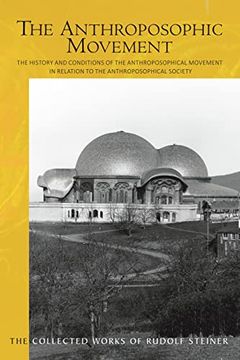
portada The Anthroposophic Movement: The History and Conditions of the Anthroposophical Movement in Relation to the Anthroposophical Society: An Encouragem
Type
Physical Book
Introduction by
Translated by
Language
English
Pages
202
Format
Paperback
Dimensions
23.4 x 15.7 x 1.5 cm
Weight
0.33 kg.
ISBN13
9781855846036

The Anthroposophic Movement: The History and Conditions of the Anthroposophical Movement in Relation to the Anthroposophical Society: An Encouragem

Rudolf Steiner (Author) · Christian Von Arnim (Introduction by, Translated by) · Rudolf Steiner Press · Paperback

The Anthroposophic Movement: The History and Conditions of the Anthroposophical Movement in Relation to the Anthroposophical Society: An Encouragem - Steiner, Rudolf ; Von Arnim, Christian ; Von Arnim, Christian

New Book Imported to New Zealand
Delivery: 31 Jul - 06 Aug Shipping: 2 to 2 business days.
NZ$ 54.89
Import costs and 15% GST included in the price ✅
NZ$ 54.89

Synopsis "The Anthroposophic Movement: The History and Conditions of the Anthroposophical Movement in Relation to the Anthroposophical Society: An Encouragem"

8 lectures to members of the Anthroposophical Society, Dornach, June 10-17, 1923 (CW 258)"The reflections we are embarking on here are intended to encourage a kind of self-examination by all those who have found their way to anthroposophy. An opportunity will be provided for such self-examination, for self-examination brought about by a characterization of the anthroposophical movement and its relationship with the Anthroposophical Society. And in this context may I begin by speaking about people who are central to such self-examination. They are yourselves. They are all those who, for one reason or another, have found their way to anthroposophy." -- Rudolf Steiner (June 10, 1923)These lectures were given at a pivotal point in the development of the anthroposophic movement. Only months earlier, an act of arson caused the destruction of the Goetheanum, and the appearance of its darkened ruins reflected the growing fragmentation of the Anthroposophical Society. Divisions were developing among members and friends, with individual energies increasingly directed toward external initiatives and projects. It was becoming clear that a new impetus was needed. Within this turbulent context, Steiner presented his lectures in a calm, lively, and informal style, declaring that a yearning for spiritual nourishment had arisen in Western culture during the final decades of the nineteenth century, and that organizations such as the Theosophical Society had gained in popularity. Despite his direct involvement in those events, Steiner is dispassionate when describing how the spiritual movements behind Theosophy and Anthroposophy were able to work together harmoniously before their unavoidable separation. Steiner's expansive review of the anthroposophic movement provides an important narrative account of the developing Western spiritual tradition and the history of the mysteries. These lectures also offer rare perceptions of Steiner's life and philosophy. Those who identify with the movement he founded will discover revealing insights into its background and its potential for future development within the broader scope of human evolution.The Anthroposophic Movement is a translation from German of Die Geschichte und die Bedingungen der anthroposophischen Bewegung im Verhältnis zur Anthroposophischen Gesellschaft. Eine Anregung zur Selbstbesinnung (GA 258).
Rudolf Steiner
  (Author)
View Author's Page
Rudolf Steiner (Donji Kraljevec, Austro-Hungarian Empire, now Croatia, February 25 or 27, 1861-Dornach, Switzerland, March 30, 1925) was an Austrian philosopher, literary scholar, educator, artist, playwright, social thinker, and occultist. He was the founder of anthroposophy, Waldorf education, biodynamic agriculture, anthroposophic medicine, and the new artistic form of eurythmy.

He described anthroposophy as follows: Anthroposophy is a path of knowledge that would like to lead the spiritual in man to the spiritual in the universe. Those who feel certain questions about the essence of man and the world as a vital necessity as the one felt when we are hungry and thirsty can be anthroposophists.

Steiner proposed a form of ethical individualism, to which he later added a more explicitly spiritual component. He derived his epistemology from the worldview of Johann Wolfgang Goethe, according to which thought is an organ of perception just like the eye or the ear. Just as the eye perceives colors and the ear sounds, so thought perceives ideas.
See more
See less

Customers reviews

Frequently Asked Questions about the Book

All books in our catalog are Original.
The book is written in English.
The binding of this edition is Paperback.

Questions and Answers about the Book

Do you have a question about the book? Login to be able to add your own question.

Opinions about Bookdelivery

More customer reviews