Tracked shipping to New Zealand with premium packaging for just NZ$15 

Ship to
New Zealand
0
  • argentina
  • chile
  • colombia
  • españa
  • méxico
  • perú
  • estados unidos
  • internacional

Select your country

Americas

Europe

Rest of the world

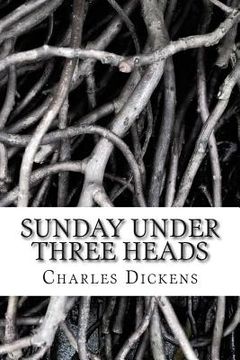
portada Sunday Under Three Heads: (Charles Dickens Classics Collection)
Type
Physical Book
Publisher
Language
English
Pages
34
Format
Paperback
Dimensions
22.9 x 15.2 x 0.2 cm
Weight
0.06 kg.
ISBN13
9781502974242

Sunday Under Three Heads: (Charles Dickens Classics Collection)

Charles Dickens (Author) · Createspace · Paperback

Sunday Under Three Heads: (Charles Dickens Classics Collection) - Charles Dickens

New Book Imported to New Zealand
Delivery: 26 Aug - 08 Sep Shipping: 17 to 21 business days.
NZ$ 46.39
Import costs and 15% GST included in the price ✅
NZ$ 46.39

Synopsis "Sunday Under Three Heads: (Charles Dickens Classics Collection)"

There are few things from which I derive greater pleasure, than walking through some of the principal streets of London on a fine Sunday, in summer, and watching the cheerful faces of the lively groups with which they are thronged. There is something, to my eyes at least, exceedingly pleasing in the general desire evinced by the humbler classes of society, to appear neat and clean on this their only holiday. There are many grave old persons, I know, who shake their heads with an air of profound wisdom, and tell you that poor people dress too well now-a-days; that when they were children, folks knew their stations in life better; that you may depend upon it, no good will come of this sort of thing in the end, -and so forth: but I fancy I can discern in the fine bonnet of the working-man's wife, or the feather-bedizened hat of his child, no inconsiderable evidence of good feeling on the part of the man himself, and an affectionate desire to expend the few shillings he can spare from his week's wages, in improving the appearance and adding to the happiness of those who are nearest and dearest to him. This may be a very heinous and unbecoming degree of vanity, perhaps, and the money might possibly be applied to better uses; it must not be forgotten, however, that it might very easily be devoted to worse: and if two or three faces can be rendered happy and contented, by a trifling improvement of outward appearance, I cannot help thinking that the object is very cheaply purchased, even at the expense of a smart gown, or a gaudy riband. There is a great deal of very unnecessary cant about the over-dressing of the common people. There is not a manufacturer or tradesman in existence, who would not employ a man who takes a reasonable degree of pride in the appearance of himself and those about him, in preference to a sullen, slovenly fellow, who works doggedly on, regardless of his own clothing and that of his wife and children, and seeming to take pleasure or pride in nothing.
Charles Dickens
  (Author)
View Author's Page
Charles Dickens (February 7, 1812 - June 9, 1870) was born in Portsmouth and was the eldest son of a Royal Navy clerk. At twelve, his father's imprisonment for debt forced him to work in a blacking factory. His education was sporadic: he taught himself shorthand, worked as a clerk in a law office, and eventually became a parliamentary correspondent for the Morning Chronicle.

Coming from a humble family, "good old Charles" did not receive formal education until he was nine, and was heavily criticized by the critics of the time for being too self-taught. His life took an unexpected turn with his father's imprisonment for debts, moving his family to live with him in jail, allowed at that time by British laws. At the age of 12, he was already considered fit to start working in a dye factory. Although his family's situation had improved, his mother insisted he keep working there, inspiring him to write one of his masterpieces, David Copperfield.

His articles, later collected in Scenes from London Life by "Boz" (1836-1837), were very successful, and with the appearance in 1837 of The Posthumous Papers of the Pickwick Club, Dickens became a true publishing phenomenon. Novels such as Oliver Twist (1837-1839), Nicholas Nickleby (1838-1839), and Barnaby Rudge (1841) gained enormous popularity, as did some travel chronicles, such as Pictures from Italy (1846). With Dombey and Son (1846-1848) he began his mature period, of which good examples are David Copperfield (1849-1850), his first novel in the first person and his favorite, in which he developed some autobiographical episodes; Bleak House (1852-1853); Little Dorrit (1855-1857), A Tale of Two Cities (1859), Great Expectations (1860-1861), and Our Mutual Friend (1864-1865). He died at Gad's Hill, his country house in Higham, in the county of Kent.
See more
See less

Customers reviews

Frequently Asked Questions about the Book

All books in our catalog are Original.
The book is written in English.
The binding of this edition is Paperback.

Questions and Answers about the Book

Do you have a question about the book? Login to be able to add your own question.

Opinions about Bookdelivery

More customer reviews