Tracked shipping to New Zealand with premium packaging for just NZ$15 

Ship to
New Zealand
0
  • argentina
  • chile
  • colombia
  • españa
  • méxico
  • perú
  • estados unidos
  • internacional

Select your country

Americas

Europe

Rest of the world

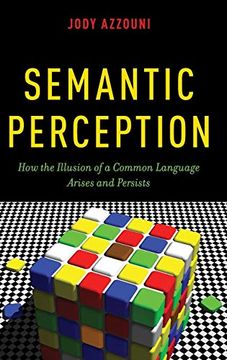
portada Semantic Perception: How the Illusion of a Common Language Arises and Persists
Type
Physical Book
Year
2013
Language
English
Pages
384
Format
Hardcover
ISBN13
9780199967407
Edition No.
1
Categories

Semantic Perception: How the Illusion of a Common Language Arises and Persists

Jody Azzouni (Author) · Oxford University Press · Hardcover

Semantic Perception: How the Illusion of a Common Language Arises and Persists - Jody Azzouni

New Book Imported to New Zealand
Delivery: 14 Jul - 21 Jul Shipping: 5 to 6 business days.
NZ$ 218.59
Import costs and 15% GST included in the price ✅
NZ$ 218.59

Synopsis "Semantic Perception: How the Illusion of a Common Language Arises and Persists "

Jody Azzouni argues that we involuntarily experience certain physical items, certain products of human actions, and certain human actions themselves as having meaning-properties. We understand these items as possessing meaning or as having (or being capable of having) truth values. For example, a sign on a door reading "Drinks Inside" strikes native English speakers as referring to liquids in the room behind the door. The sign has a truth value--if no drinks are found in the room, the sign is misleading. Someone pointing in a direction has the same effect: we experience her gesture as significant. Azzouni does not suggest that we don't recognize the expectations or intentions of speakers (including ourselves); we do recognize that the person pointing in a certain direction intends for us to understand her gesture's significance. Nevertheless, Azzouni asserts that we experience that gesture as having significance independent of her intentions. The gesture is meaningful on its own. The same is true of language, both spoken and written. We experience the meanings of language artifacts as independent of their makers' intentions in the same way that we experience an object's shape as a property independent of the object's color. There is a distinctive phenomenology to the experience of understanding language, and Semantic Perception shows how this phenomenology can be brought to bear as evidence for and against competing theories of language.

Customers reviews

Frequently Asked Questions about the Book

All books in our catalog are Original.
The book is written in English.
The binding of this edition is Hardcover.

Questions and Answers about the Book

Do you have a question about the book? Login to be able to add your own question.

Opinions about Bookdelivery

More customer reviews