Tracked shipping to New Zealand with premium packaging for just NZ$15 

Ship to
New Zealand
0
  • argentina
  • chile
  • colombia
  • españa
  • méxico
  • perú
  • estados unidos
  • internacional

Select your country

Americas

Europe

Rest of the world

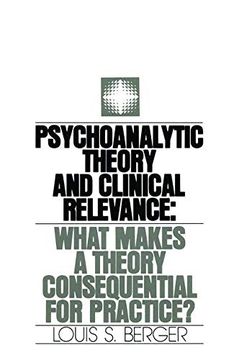
portada Psychoanalytic Theory and Clinical Relevance: What Makes a Theory Consequential for Practice?
Type
Physical Book
Publisher
Year
2019
Language
English
Pages
224
Format
Paperback
ISBN13
9781138872134
Edition No.
1

Psychoanalytic Theory and Clinical Relevance: What Makes a Theory Consequential for Practice?

Louis S. Berger (Author) · Routledge · Paperback

Psychoanalytic Theory and Clinical Relevance: What Makes a Theory Consequential for Practice? - Louis S. Berger

New Book Imported to New Zealand
Delivery: 04 Aug - 11 Aug Shipping: 4 to 5 business days.
NZ$ 117.05
Import costs and 15% GST included in the price ✅
NZ$ 117.05

Synopsis "Psychoanalytic Theory and Clinical Relevance: What Makes a Theory Consequential for Practice? "

In this provocative contribution to both psychoanalytic theory and the philosophy of science, Louis Berger grapples with the nature of "consequential" theorizing, i.e., theorizing that is relevant to what transpires in clinical practice.  By examining analysis as a genre of "state process formalism" - the standard format of scientific theories - Berger demonstrates why contemporary theorizing inevitably fails to explain crucial aspects of practice.  His critique, in this respect, pertains both to the formal structure of psychoanalytic explanation and the technical language through which this structure gains expression. The pragmatic recommendations that issue from this critique are illustrated with respect to a number of perennial problem areas besetting analysis and cognate disciplines.  In a discussion that encompases theories of affect, issues in family therapy, the nature of first-language acquisition, and the philisophical topics of free will and determinism, Berger shows that certain systems of representation (including ordinary language) can describe the psychological realm adequately, and that such systems necessarily follow modern physics in rejecting naive assumptions about the separability of theory and practice.  His proposals culminate in a "nonhierarchical" conception of psychoanalytic theory that assigns a separate status to the clinically pragmatic level of theorizing. In both his critique of contemporary analysis and his reconstructive proposals, Berger fuses into a highly readable argument a fascinating range of insights culled from epistemology, linguistics, physics, logic, computer science, history, and aesthetics.  More impressively still, he demonstrates how an investigation of psychoanalytic theory can serve as a vehicle for examining pervasive epistemological issues in both philosophy and the social sciences.   

Customers reviews

Frequently Asked Questions about the Book

All books in our catalog are Original.
The book is written in English.
The binding of this edition is Paperback.

Questions and Answers about the Book

Do you have a question about the book? Login to be able to add your own question.

Opinions about Bookdelivery

More customer reviews