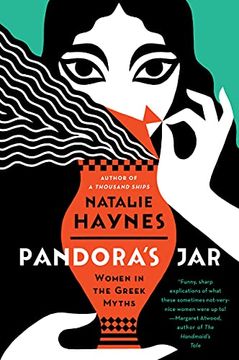
Synopsis "Pandora'S Jar: Women in the Greek Myths "
NEW YORK TIMES BESTSELLER"Funny, sharp explications of what these sometimes not-very-nice women were up to, and how they sometimes made idiots of . . . but read on!"--Margaret Atwood, author of The Handmaid's TaleThe national bestselling author of A Thousand Ships returns with a fascinating, eye-opening take on the remarkable women at the heart of classical stories Greek mythology from Helen of Troy to Pandora and the Amazons to Medea.The tellers of Greek myths--historically men--have routinely sidelined the female characters. When they do take a larger role, women are often portrayed as monstrous, vengeful or just plain evil--like Pandora, the woman of eternal scorn and damnation whose curiosity is tasked with causing all the world's suffering and wickedness when she opened that forbidden box. But, as Natalie Haynes reveals, in ancient Greek myths there was no box. It was a jar . . . which is far more likely to tip over.In Pandora's Jar, the broadcaster, writer, stand-up comedian, and passionate classicist turns the tables, putting the women of the Greek myths on an equal footing with the men. With wit, humor, and savvy, Haynes revolutionizes our understanding of epic poems, stories, and plays, resurrecting them from a woman's perspective and tracing the origins of their mythic female characters. She looks at women such as Jocasta, Oedipus' mother-turned-lover-and-wife (turned Freudian sticking point), at once the cleverest person in the story and yet often unnoticed. She considers Helen of Troy, whose marriage to Paris "caused" the Trojan war--a somewhat uneven response to her decision to leave her husband for another man. She demonstrates how the vilified Medea was like an ancient Beyonce--getting her revenge on the man who hurt and betrayed her, if by extreme measures. And she turns her eye to Medusa, the original monstered woman, whose stare turned men to stone, but who wasn't always a monster, and had her hair turned to snakes as punishment for being raped.Pandora's Jar brings nuance and care to the millennia-old myths and legends and asks the question: Why are we so quick to villainize these women in the first place--and so eager to accept the stories we've been told?
Natalie Haynes es una escritora, comediante y divulgadora británica especializada en mitología y literatura clásica grecorromana. Estudió lenguas clásicas en la Universidad de Cambridge y construyó una trayectoria singular al combinar investigación académica con humor, radio y narrativa contemporánea. A través de novelas, ensayos y programas culturales para la BBC, se convirtió en una de las voces más reconocidas en la reinterpretación moderna de los mitos clásicos desde perspectivas femeninas. Su estilo destaca por acercar tragedias antiguas al lector actual sin perder complejidad histórica, demostrando que los dramas familiares griegos ya tenían suficiente caos mucho antes de existir las redes sociales.
Entre sus obras más celebradas se encuentra Las mil naves (A Thousand Ships), novela inspirada en la guerra de Troya narrada desde el punto de vista de las mujeres afectadas por el conflicto. El libro recibió gran reconocimiento internacional y fue finalista del Women’s Prize for Fiction. También destacan títulos como Stone Blind, centrado en Medusa, y Pandora’s Jar, ensayo sobre las figuras femeninas de la mitología griega. Haynes ha sido ampliamente valorada por rescatar voces olvidadas de los relatos clásicos y reinterpretarlas con inteligencia, ironía y sensibilidad contemporánea.