Tracked shipping to New Zealand with premium packaging for just NZ$15 

Ship to
New Zealand
0
  • argentina
  • chile
  • colombia
  • españa
  • méxico
  • perú
  • estados unidos
  • internacional

Select your country

Americas

Europe

Rest of the world

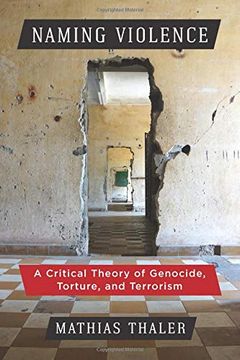
portada Naming Violence: A Critical Theory of Genocide, Torture, and Terrorism (New Directions in Critical Theory)
Type
Physical Book
Year
2018
Language
English
Pages
248
Format
Hardcover
ISBN13
9780231188142

Naming Violence: A Critical Theory of Genocide, Torture, and Terrorism (New Directions in Critical Theory)

Professor Mathias Thaler (Author) · Columbia University Press · Hardcover

Naming Violence: A Critical Theory of Genocide, Torture, and Terrorism (New Directions in Critical Theory) - Professor Mathias Thaler

Cheaper New Book Imported to New Zealand
Delivery: 26 Nov - 08 Dec Shipping: 12 to 16 business days.
NZ$ 165.31
Faster New Book Imported to New Zealand
Delivery: 27 Nov - 04 Dec Shipping: 13 to 14 business days.
NZ$ 213.72
Import costs and 15% GST included in the price ✅
NZ$ 165.31

Synopsis "Naming Violence: A Critical Theory of Genocide, Torture, and Terrorism (New Directions in Critical Theory) "

Much is at stake when we choose a word for a form of violence: whether a conflict is labeled civil war or genocide, whether we refer to “enhanced interrogation techniques” or to “torture,” whether a person is called a “terrorist” or a “patriot.” Do these decisions reflect the rigorous application of commonly accepted criteria, or are they determined by power structures and partisanship? How is the language we use for violence entangled with the fight against it?In Naming Violence, Mathias Thaler articulates a novel perspective on the study of violence that demonstrates why the imagination matters for political theory. His analysis of the politics of naming charts a middle ground between moralism and realism, arguing that political theory ought to question whether our existing vocabulary enables us to properly identify, understand, and respond to violence. He explores how narrative art, thought experiments, and historical events can challenge and enlarge our existing ways of thinking about violence. Through storytelling, hypothetical situations, and genealogies, the imagination can help us see when definitions of violence need to be revisited by shedding new light on prevalent norms and uncovering the contingent history of ostensibly self-evident beliefs. Naming Violence demonstrates the importance of political theory to debates about violence across a number of different disciplines from film studies to history.

Customers reviews

Frequently Asked Questions about the Book

All books in our catalog are Original.
The book is written in English.
The binding of this edition is Hardcover.

Questions and Answers about the Book

Do you have a question about the book? Login to be able to add your own question.

Opinions about Bookdelivery

More customer reviews