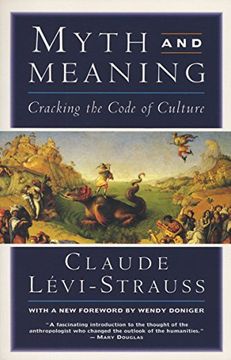
Synopsis "Myth and Meaning: Cracking the Code of Culture "
Ever since the rise of science and the scientific method in the seventeenth century, we have rejected mythology as the product of superstitious and primitive minds. Only now are we coming to a fuller appreciation of the nature and role of myth in human history. In these five lectures originally prepared for Canadian radio, Claude Lévi-Strauss offers, in brief summations, the insights of a lifetime spent interpreting myths and trying to discover their significance for human understanding. The lectures begin with a discussion of the historical split between mythology and science and the evidence that mythic levels of understanding are being reintegrated in our approach to knowledge. In an extension of this theme, Professor Lévi-Strauss analyzes what we have called “primitive thinking” and discusses some universal features of human mythology. The final two lectures outline the functional relationship between mythology and history and the structural relationship between mythology and music.
Claude Lévi-Strauss fue un antropólogo y etnólogo francés, nacido el 28 de noviembre de 1908 en Bruselas y fallecido el 30 de octubre de 2009 en París. Es considerado uno de los pensadores más influyentes del siglo XX y el principal representante del estructuralismo en las ciencias sociales. Su formación comenzó en filosofía, pero pronto se interesó por la antropología, lo que lo llevó a realizar trabajo de campo en Brasil en la década de 1930, estudiando a pueblos indígenas como los bororo y los nambikwara.
Lévi-Strauss revolucionó la antropología al aplicar principios del estructuralismo lingüístico al estudio de las culturas. Propuso que las estructuras del pensamiento humano son universales y que pueden descubrirse en mitos, sistemas de parentesco y costumbres. Su obra más conocida, Tristes trópicos (1955), mezcla autobiografía, reflexión filosófica y análisis etnográfico. También destacan El pensamiento salvaje y la serie Mitológicas, donde analiza cientos de mitos americanos para demostrar patrones estructurales comunes.
Su enfoque cambió la manera de entender la cultura, sugiriendo que detrás de las diferencias superficiales hay una lógica común en todas las sociedades. Fue miembro de la Academia Francesa y recibió numerosos reconocimientos. Su legado sigue influyendo en antropología, filosofía, sociología y literatura.