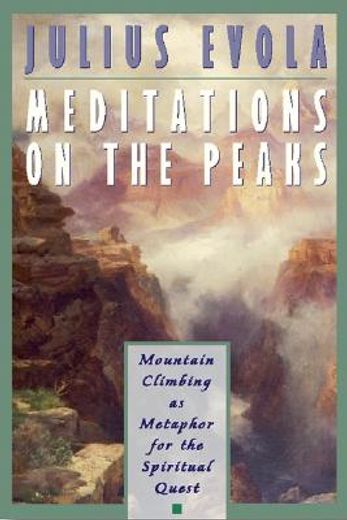
meditations on the peaks,mountain climbing as metophor for the spiritual quest
Julius Evola
Synopsis "meditations on the peaks,mountain climbing as metophor for the spiritual quest"
Evola articulates the close relationship between the physical rigors of mountain climbing and the ascent of the initiate toward self-transcendence. Julius Evola, a leading exponent of esoteric thought, was also an ardent mountain climber who personally scaled the peaks of the Tyrols, Alps, and Dolomites. For Evola the physical conquest of a mountain, with all the courage, self-transcendence and mental lucidity that it entails, becomes an inseparable and complementary part of spiritual awakening. It is no coincidence that many ancient cultures chose mountains as the abodes of their gods and considered the rigorous ascent of peaks as the task of heroes and initiates. In modern times, which tend to suffocate the heroic with naked self interest, the mountain still forms part of the profound dimension of spirit where the soul finds within itself more than what it thought itself to be. In Meditations on the Peaks, Evola combines recollections of his own experiences with reflections on other inspirational men and women who shared his view of the transcendent greatness of mountains.
Julius Evola (Roma, 19 de mayo de 1898 – 11 de junio de 1974) fue un filósofo, escritor y pensador italiano, conocido por su postura radicalmente tradicionalista, esotérica y su crítica feroz al liberalismo, la democracia y la modernidad.
De familia aristocrática, Evola se formó en ingeniería, pero su verdadera vocación fue la filosofía y las artes. Durante su juventud, se interesó por el dadaísmo y el futurismo, influenciado por figuras como Papini y Marinetti. Sin embargo, tras la Primera Guerra Mundial, sufrió una crisis existencial que lo llevó a un profundo estudio de la metafísica, la religión comparada y el esoterismo.
En la década de 1930, Evola se alineó con el fascismo italiano, aunque mantuvo una postura crítica hacia el régimen de Mussolini, considerándolo plebeyo y demagógico. En 1934, publicó su obra más influyente, Revuelta contra el mundo moderno, donde abogó por un retorno a valores tradicionales y una élite espiritual que guiara a la humanidad. Durante la Segunda Guerra Mundial, se trasladó a Viena, donde fue gravemente herido por un obús soviético, quedando parapléjico.
Tras la guerra, Evola continuó escribiendo y desarrollando su pensamiento, que influyó en movimientos neofascistas y tradicionalistas. Su legado es controvertido, siendo considerado por algunos como un pensador radical y por otros como un ideólogo extremista.