Tracked shipping to New Zealand with premium packaging for just NZ$15 

Ship to
New Zealand
0
  • argentina
  • chile
  • colombia
  • españa
  • méxico
  • perú
  • estados unidos
  • internacional

Select your country

Americas

Europe

Rest of the world

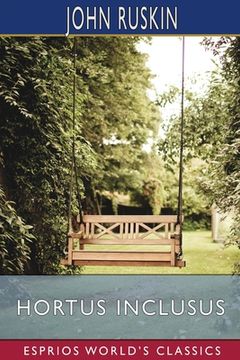
portada Hortus Inclusus (Esprios Classics)
Type
Physical Book
Publisher
Language
English
Pages
172
Format
Paperback
Dimensions
22.9x15.2x1 cm
Weight
0.26 kg.
ISBN13
9781006586040

Hortus Inclusus (Esprios Classics)

John Ruskin (Author) · Blurb · Paperback

Hortus Inclusus (Esprios Classics) - John Ruskin

New Book Imported to New Zealand
Delivery: 25 Nov - 02 Dec Shipping: 5 to 6 business days.
NZ$ 63.94
Import costs and 15% GST included in the price ✅
NZ$ 63.94

Synopsis "Hortus Inclusus (Esprios Classics)"

John Ruskin (1819-1900) was the leading English art critic of the Victorian era, as well as an art patron, draughtsman, watercolourist, philosopher, prominent social thinker and philanthropist. He wrote on subjects as varied as geology, architecture, myth, ornithology, literature, education, botany and political economy. His writing styles and literary forms were equally varied. He wrote essays and treatises, poetry and lectures, travel guides and manuals, letters and even a fairy tale. He also made detailed sketches and paintings of rocks, plants, birds, landscapes, architectural structures and ornamentation. The elaborate style that characterised his earliest writing on art gave way in time to plainer language designed to communicate his ideas more effectively. In all of his writing, he emphasised the connections between nature, art and society.
John Ruskin
  (Author)
View Author's Page
John Ruskin (London, February 8, 1819 - Coniston, January 20, 1900) was an influential writer, art critic, and British social reformer of the 19th century. His work covers a wide range of subjects, including art, architecture, and political economy.

Among his most notable works are "Modern Painters" (1843-1860), a defense of contemporary landscape painting; "The Seven Lamps of Architecture" (1849), where he establishes fundamental principles of architecture; and "The Stones of Venice" (1851-1853), a deep analysis of Venetian architecture. Additionally, "Sesame and Lilies" (1865) and "The Bible of Amiens" (1880-1885) reflect his interest in literature and history.
See more
See less

Customers reviews

Frequently Asked Questions about the Book

All books in our catalog are Original.
The book is written in English.
The binding of this edition is Paperback.

Questions and Answers about the Book

Do you have a question about the book? Login to be able to add your own question.

Opinions about Bookdelivery

More customer reviews