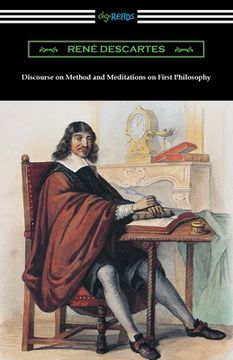
Discourse on Method and Meditations on First Philosophy
René Descartes
Synopsis "Discourse on Method and Meditations on First Philosophy"
Contained here in this volume are two of the most influential works of philosophy ever written, Descartes' "Discourse on Method" and "Meditations on First Philosophy." First published in 1637, "Discourse on the Method of Rightly Conducting the Reason and Seeking for Truth in the Sciences," as it is more fully known, is a foundational work of modern philosophy which is noted for being one of the first to apply the scientific method to the discipline. Descartes approaches the subject of skepticism in philosophy by throwing away all preconceived notions of reality and building up from a base of truths he found to be incontrovertible. It is from this work that we find one of Descartes' most famous quotations "I think, therefore I am." This phrase alone probably best exemplifies what Descartes believed to be an incontrovertible truth. First published in 1641, "Meditations on First Philosophy" follows upon his earlier work by applying his method to a philosophical examination of the existence of God and the immortality of the soul. While the philosophical conclusions arrived at by Descartes' work have met with criticism, his profound influence ultimately lies with his insistence on questioning everything. This edition is printed on premium acid-free paper and follows the translations of Elizabeth S. Haldane.
René Descartes (1596–1650) fue un filósofo, matemático y científico francés, considerado uno de los padres de la filosofía moderna. Nació en La Haye en Touraine, en una familia acomodada, y recibió una formación sólida en el Colegio de La Flèche, uno de los centros jesuitas más prestigiosos de la época. Su curiosidad por el conocimiento lo llevó a interesarse tanto por las ciencias como por la lógica, alejándose progresivamente de la escolástica tradicional.
En el ámbito filosófico, Descartes es célebre por su método basado en la duda sistemática, cuyo propósito era encontrar un fundamento absolutamente seguro para el conocimiento. De este proceso surgió su famosa afirmación “Cogito, ergo sum” (“Pienso, luego existo”), que se convirtió en la base de su sistema racionalista. Sus obras principales, como Meditaciones metafísicas y Discurso del método, marcaron un antes y un después en la filosofía occidental.
Como matemático, hizo contribuciones fundamentales: estableció la geometría analítica, que unió el álgebra con la geometría al introducir el uso de coordenadas para describir figuras. También aportó al desarrollo del método científico y estudió fenómenos físicos como la óptica y el movimiento.
Descartes pasó buena parte de su vida adulta en los Países Bajos, donde escribió la mayor parte de su obra. Murió en Estocolmo en 1650, invitado por la reina Cristina de Suecia. Su legado continúa influyendo la filosofía, la ciencia y las matemáticas hasta la actualidad.