Tracked shipping to New Zealand with premium packaging for just NZ$15 

Ship to
New Zealand
0
  • argentina
  • chile
  • colombia
  • españa
  • méxico
  • perú
  • estados unidos
  • internacional

Select your country

Americas

Europe

Rest of the world

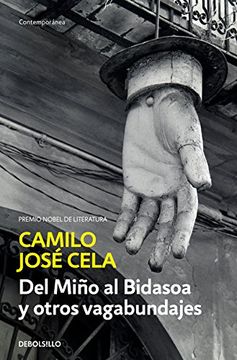
portada Del Miño al Bidasoa y otros vagabundajes (Spanish Edition)
Type
Physical Book
Publisher
Collection
Contemporánea
Year
2018
Pages
648
Format
Paperback
Dimensions
18.90 x 12.70
ISBN13
9788466342476
Edited in
España
Edition No.
1

Del Miño al Bidasoa y otros vagabundajes (Spanish Edition)

Camilo José Cela (Author) · Debolsillo · Paperback

Del Miño al Bidasoa y otros vagabundajes (Spanish Edition) - Camilo José Cela

New Book Imported to New Zealand
Delivery: 20 Aug - 02 Sep Shipping: 9 to 13 business days.
NZ$ 58.47
Import costs and 15% GST included in the price ✅
NZ$ 58.47

Synopsis "Del Miño al Bidasoa y otros vagabundajes (Spanish Edition)"

Primer volumen de los libros de viajes del Premio Nobel español Camilo José Cela. un recorrido por el norte y el sur de España.

Los dos libros de viajes reunidos en este volumen están escritos en la estela del éxito obtenido por Cela con Viaje a la Alcarria(1948). Los dos tienen un origen común: el viaje que. por encargo del diario Pueblo. realizó el autor en el verano de 1948 por buena parte de España.

A partir de lascrónicas redactadas para la ocasión. Cela armaría. años después. Del Miño al Bidasoa (1952) y. en estricta continuidad. Primer viaje andaluz (1959). con los que confirmaría su maestría en un género en el que reflejó su amor al vagabundaje y su personalísima visión de las gentes y las tierras de su país.

Reseñas:
«Ninguno de los grandes escritores españoles. desde la generación del 98 hasta nuestros días. ha realizado un esfuerzo semejante por reflejar la vida y el paisaje de nuestra tierra.»
Antonio Vilanova

«Cela representa la escritura total. la escritura en acto. la escritura insomne. indeclinable y pugnaz.»
Juan Manuel de Prada

«Cela es a un tiempo tierno y cruel. lírico y bronco. áspero como una alimaña hambrienta y suave como un pájaro aterido. Es un heredero de la tragedia clásica. capaz de sumergirnos en las simas de la angustia y del dolor; y también un heredero de la picaresca española.»
Juan Manuel de Prada

«Uno de los escritores más radicales de todo el siglo XX. [...] Los relojes corren a favor de Camilo José cela. segundo a segundo. minuto a minuto. hasta marcar la hora exacta de sueterna maestría.»
Alberto Olmos

«Elúltimo gran escritor español. creador de fábulas. de lenguaje. de palabras. con una capacidad prodigiosa para expresarse.»
Francisco Umbral

«Su obra trascenderá las anécdotas y hará que se escuche su voz imprescindible.»
Víctor García de la Concha

«Celabuscó la notoriedad. pero también se exigió a sí mismo una prosa con la sencillez de Baroja y el fulgor de Valle-Inclán.»
El País
Camilo José Cela
  (Author)
View Author's Page
Camilo José Cela Trulock (Iria Flavia, A Coruña, May 11, 1916 - Madrid, January 17, 2002), Spanish writer and academic, is one of the essential authors in the canon of Spanish-language literature. In 1925, he moved to Madrid with his family and in 1934 began studying Medicine at the Complutense University, which he soon abandoned to attend as an auditor the classes of Contemporary Literature by Pedro Salinas. It is Salinas, to whom Cela showed his first poems, a key figure in the settling of his literary vocation

In 1940, Cela tried a new career, this time in Law -which he would also end up abandoning-, while writing his first major work, La familia de Pascual Duarte (1942), whose second edition had to be published in Buenos Aires after being banned by the censorship. This first novel was soon followed by Viaje a La Alcarria (1948) and La colmena (1951), published in Buenos Aires and immediately banned in Spain. In 1954 he moved to Mallorca and shortly after, in 1957, he was appointed academic of the language. His work, extensive and varied, has been published regularly since then

Among them, in addition to the titles already mentioned, it is worth highlighting El gallego y su cuadrilla (1949), Del Miño al Bidasoa (1952), San Camilo, 1936 (1969), Mazurca para dos muertos (1983, National Narrative Award) or Cristo versus Arizona (1988). To these should be added his work as a columnist for various newspapers. Among the awards he treasured throughout his life, it is mandatory to mention the Prince of Asturias Award for Letters (1987), the Nobel Prize in Literature (1989) and the Miguel de Cervantes (1995)
See more
See less

Customers reviews

Frequently Asked Questions about the Book

All books in our catalog are Original.
The binding of this edition is Paperback.

Questions and Answers about the Book

Do you have a question about the book? Login to be able to add your own question.

Opinions about Bookdelivery

More customer reviews