Tracked shipping to New Zealand with premium packaging for just NZ$15 

Ship to
New Zealand
0
  • argentina
  • chile
  • colombia
  • españa
  • méxico
  • perú
  • estados unidos
  • internacional

Select your country

Americas

Europe

Rest of the world

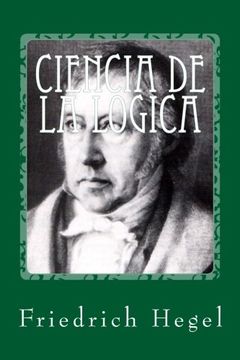
portada Ciencia de la Logica (in Spanish)
Type
Physical Book
Publisher
Year
2017
Language
Spanish
Pages
478
Format
Paperback
Dimensions
22.9 x 15.2 x 2.4 cm
Weight
0.64 kg.
ISBN13
9781979902304

Ciencia de la Logica (in Spanish)

G. W. F. Hegel (Author) · Createspace · Paperback

Ciencia de la Logica (in Spanish) - G. W. F. Hegel

New Book Imported to New Zealand
Delivery: 04 Sep - 16 Sep Shipping: 16 to 20 business days.
NZ$ 65.78
Import costs and 15% GST included in the price ✅
NZ$ 65.78

Synopsis "Ciencia de la Logica (in Spanish)"

La nueva logica con la que Hegel quiere sustituir la tradicional, se plantea el problema procedente de la gnoseologia kantiana, cuyo dualismo, de pensamiento y ser, cerraba el transito de nuestra conciencia de ser en si (noumeno). Hegel rechaza ese dualismo y el fantasma de lo incognoscible; el pensamiento es el ser o noume no verdadero. Sin embargo, debemos conocerlo; lo que no se logra con aceptar empiricamente las determinaciones del pensamiento, ofrecidas por la logica tradicional, sino con engendrarlas y coordinarlas mediante el movimiento dialectico del pensamiento mismo. Asi como la Fenomenologia ha mostrado que cada forma de la conciencia, al realizarse, se niega para resurgir mas rica en la negacion, del mismo modo la Logica debe mostrar el mismo movimiento dialectico en el sistema, de las categorias del pensamiento puro, cuya cadena, no se desarrolla por deduccion analitica, que extrae de los eslabones antecedentes los sucesivos, sino en un proceso sintetico creador, engendrado por lo insatisfactorio inherente a cada eslabon. La filosofia no hace otra cosa que seguir al pensamiento es esta dialectica.
G. W. F. Hegel
  (Author)
View Author's Page
Georg Wilhelm Friedrich Hegel (1770-1831) was a German philosopher, one of the most influential figures of German idealism. He studied at the Tübinger Stift alongside Friedrich Hölderlin and Friedrich Schelling, developing a philosophical system based on dialectics, where the unfolding of history and reality are explained through contradiction and its resolution. He was a professor at the University of Jena and later at the University of Berlin, where his thought gained great influence.

Among his most notable works are Phenomenology of Spirit (1807), Science of Logic (1812-1816), and Encyclopedia of the Philosophical Sciences (1817). He also published Lectures on the Philosophy of History (1837) and Lectures on the History of Philosophy (1833-1836, compiled posthumously). His philosophy has been fundamental in multiple currents of modern thought, including Marxism and existentialism.
See more
See less

Customers reviews

Frequently Asked Questions about the Book

All books in our catalog are Original.
The book is written in Spanish.
The binding of this edition is Paperback.

Questions and Answers about the Book

Do you have a question about the book? Login to be able to add your own question.

Opinions about Bookdelivery

More customer reviews