Tracked shipping to New Zealand with premium packaging for just NZ$15 

Ship to
New Zealand
0
  • argentina
  • chile
  • colombia
  • españa
  • méxico
  • perú
  • estados unidos
  • internacional

Select your country

Americas

Europe

Rest of the world

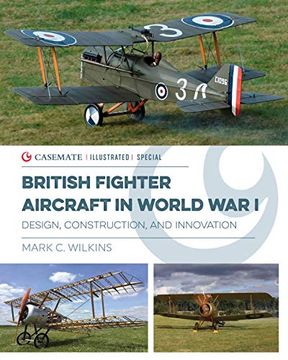
portada British Fighter Aircraft in Wwi: Design, Construction and Innovation
Type
Physical Book
Publisher
Year
2021
Language
English
Pages
192
Format
Hardcover
Dimensions
25.7x20.3x1.5 cm
Weight
0.86 kg.
ISBN13
9781612008813

British Fighter Aircraft in Wwi: Design, Construction and Innovation

Mark C. Wilkins (Author) · Casemate · Hardcover

British Fighter Aircraft in Wwi: Design, Construction and Innovation - Wilkins, Mark C.

Cheaper New Book Imported to New Zealand
Delivery: 02 Nov - 10 Nov Shipping: 13 to 15 business days.
NZ$ 89.83
Faster New Book Imported to New Zealand
Delivery: 15 Oct - 22 Oct Shipping: 1 to 2 business days.
NZ$ 91.10
Import costs and 15% GST included in the price ✅
NZ$ 89.83

Synopsis "British Fighter Aircraft in Wwi: Design, Construction and Innovation"

"Go buy this book right now. It is rare that ISD gives an instant five-star rating to any new volume, but Mark C. Wilkins' British Fighter Aircraft in World War I is a rare book." -- Indy Squadron DispatchWorld War I witnessed unprecedented growth and innovation in aircraft design, construction, and as the war progressed--mass production. Each country generated its own innovations sometimes in surprising ways--Albatros Fokker, Pfalz, and Junkers in Germany and Nieuport, Spad, Sopwith and Bristol in France and Britain.This book focuses on the British approach to fighter design, construction, and mass production. Initially the French led the way in Allied fighter development with their Bleriot trainers then nimble Nieuport Scouts--culminating with the powerful, fast gun platforms as exemplified by the Spads. The Spads had a major drawback however, in that they were difficult and counter-intuitive to fix in the field. The British developed fighters in a very different way; Tommy Sopwith had a distinctive approach to fighter design that relied on lightly loaded wings and simple functional box-girder fuselages. His Camel was revolutionary as it combined all the weight well forward; enabling the Camel to turn very quickly--but also making it an unforgiving fighter for the inexperienced. The Royal Aircraft Factory's SE5a represented another leap forward with its comfortable cockpit, modern instrumentation, and inline engine--clearly influenced by both Spads and German aircraft.Each manufacturer and design team vied for the upper hand and deftly and quickly appropriated good ideas from other companies--be they friend or foe. Developments in tactics and deployment also influenced design--from the early reconnaissance planes, to turn fighters, finally planes that relied upon formation tactics, speed, and firepower. Advances were so great that the postwar industry seemed bland by comparison.

Customers reviews

Frequently Asked Questions about the Book

All books in our catalog are Original.
The book is written in English.
The binding of this edition is Hardcover.

Questions and Answers about the Book

Do you have a question about the book? Login to be able to add your own question.

Opinions about Bookdelivery

More customer reviews