Tracked shipping to New Zealand with premium packaging for just NZ$15 

Ship to
New Zealand
0
  • argentina
  • chile
  • colombia
  • españa
  • méxico
  • perú
  • estados unidos
  • internacional

Select your country

Americas

Europe

Rest of the world

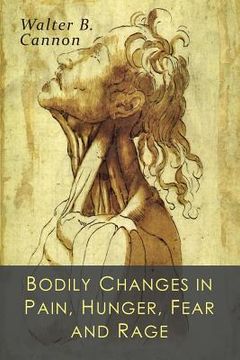
portada Bodily Changes in Pain, Hunger, Fear and Rage: An Account of Recent Researches into the Function of Emotional Excitement
Type
Physical Book
Language
English
Pages
326
Format
Paperback
Dimensions
23.4 x 15.6 x 1.9 cm
Weight
0.50 kg.
ISBN13
9781684220489

Bodily Changes in Pain, Hunger, Fear and Rage: An Account of Recent Researches into the Function of Emotional Excitement

Walter B. Cannon (Author) · Martino Fine Books · Paperback

Bodily Changes in Pain, Hunger, Fear and Rage: An Account of Recent Researches into the Function of Emotional Excitement - Cannon, Walter B.

Cheaper New Book Imported to New Zealand
Delivery: 02 Sep - 14 Sep Shipping: 17 to 21 business days.
NZ$ 58.56
Faster New Book Imported to New Zealand
Delivery: 27 Aug - 04 Sep Shipping: 14 to 15 business days.
NZ$ 72.64
Import costs and 15% GST included in the price ✅
NZ$ 58.56

Synopsis "Bodily Changes in Pain, Hunger, Fear and Rage: An Account of Recent Researches into the Function of Emotional Excitement"

2016 Reprint of 1925 Edition. Full facsimile of the original edition, not reproduced with Optical Recognition Software. Cannon is best known for his work on the "Fight or Flight" response. In 1915, he coined the term "fight or flight" to describe an animal's response to threats in "Bodily Changes in Pain, Hunger, Fear and Rage: An Account of Recent Researches into the Function of Emotional Excitement." He is also credited with being one of the first to understand the significance of "Homeostasis" in the self-regulation of each human being. He developed the concept of "Homeostasis" from the earlier idea of Claude Bernard of milieu interieur, and popularized it in his book "The Wisdom of the Body" in 1932. Cannon presented four tentative propositions to describe the general features of homeostasis: Constancy in an open system, such as our bodies represent, requires mechanisms that act to maintain this constancy. Cannon based this proposition on insights into the ways by which steady states such as glucose concentrations, body temperature and acid-base balance were regulated. Steady-state conditions require that any tendency toward change automatically meets with factors that resist change. An increase in blood sugar results in thirst as the body attempts to dilute the concentration of sugar in the extracellular fluid. The regulating system that determines the homeostatic state consists of a number of cooperating mechanisms acting simultaneously or successively. Blood sugar is regulated by insulin and other hormones that control its release from the liver or its uptake by the tissues. Homeostasis does not occur by chance, but is the result of organized self-government.

Customers reviews

Frequently Asked Questions about the Book

All books in our catalog are Original.
The book is written in English.
The binding of this edition is Paperback.

Questions and Answers about the Book

Do you have a question about the book? Login to be able to add your own question.

Opinions about Bookdelivery

More customer reviews