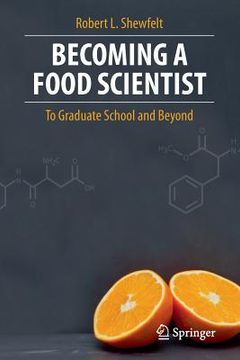
Becoming a Food Scientist is designed as a reservoir of ideas for those beginning a graduate education in food science or beginning a professional career in the field. Although at times it may read as a how-to manual for success in graduate school, it is meant to encourage each reader to study the research process, to challenge conventional wisdom, and to develop a career path that maximizes the probability of success both in school and beyond. The author has viewed food science graduate programs through the lenses of programs at four universities and service in numerous activities with the Institute of Food Technologists. This book is thus focused on the field of food science, but it may have relevance to other scientific disciplines. The book introduces the concept of research as process in the first chapter. Subsequent chapters focus on individual unit operations of research: idea generation, problem definition, critical evaluation of the literature, method selection, experimental design, data collection, processing and analysis, and knowledge dissemination. Successful graduate students in food science must master each of these operations. The final section of the book pushes the reader beyond graduate school into its practice in the real world. Topics covered in the maturation of a food scientist include the scientific meeting, critical thinking, science and philosophy, ethics, finding and managing the literature, planning, grantsmanship, laboratory setup and management, and career development. This book should be a meaningful companion for any graduate student in the field and those transitioning from graduate school to the food science profession.