Tracked shipping to New Zealand with premium packaging for just NZ$15 

Ship to
New Zealand
0
  • argentina
  • chile
  • colombia
  • españa
  • méxico
  • perú
  • estados unidos
  • internacional

Select your country

Americas

Europe

Rest of the world

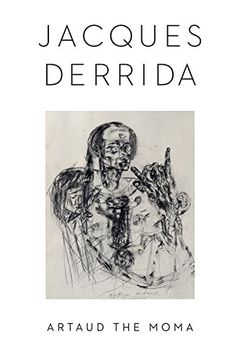
portada Artaud the Moma (Columbia Themes in Philosophy, Social Criticism, and the Arts)
Type
Physical Book
Year
2017
Language
English
Pages
112
Format
Paperback
ISBN13
9780231181679

Artaud the Moma (Columbia Themes in Philosophy, Social Criticism, and the Arts)

Jacques Derrida (Author) · Columbia University Press · Paperback

Artaud the Moma (Columbia Themes in Philosophy, Social Criticism, and the Arts) - Jacques Derrida

Cheaper New Book Imported to New Zealand
Delivery: 24 Aug - 04 Sep Shipping: 11 to 15 business days.
NZ$ 61.91
Faster New Book Imported to New Zealand
Delivery: 26 Aug - 03 Sep Shipping: 13 to 14 business days.
NZ$ 67.70
Import costs and 15% GST included in the price ✅
NZ$ 61.91

Synopsis "Artaud the Moma (Columbia Themes in Philosophy, Social Criticism, and the Arts) "

In 1996 Jacques Derrida gave a lecture at the Museum of Modern Art in New York on the occasion of Antonin Artaud: Works on Paper, one of the first major international exhibitions to present the avant-garde dramatist and poet's paintings and drawings. Derrida's original title, "Artaud the Moma," is a characteristic play on words. It alludes to Artaud's calling himself Mômo, Marseilles slang for "fool," upon his return to Paris in 1946 after nine years in various asylums, while playing off of the museum's nickname, MoMA. But the title was not deemed "presentable or decent," in Derrida's words, by the very institution that chose to exhibit Artaud's work. Instead, the lecture was advertised as "Jacques Derrida . . . will present a lecture about Artaud's drawings."For Derrida, what was at stake was what it meant for the museum to exhibit Artaud's drawings and for him to lecture on Artaud in that institutional context. Thinking over the performative force of Artaud's work and the relation between writing and drawing, Derrida addresses the multiplicity of Artaud's identities to confront the modernist museum's valorizing of originality. He channels Artaud's specter, speech, and struggle against representation to attempt to hold the museum accountable for trying to confine Artaud within its categories. Artaud the Moma, as lecture and text, reveals the challenge that Artaud posed to Derrida―and to art and its institutional history. A powerful interjection into the museum halls, this work is a crucial moment in Derrida's thought and an insightful, unsparing reading of a challenging writer and artist.
Jacques Derrida
  (Author)
View Author's Page
Jacques Derrida nació el 15 de julio de 1930 en El Biar, Argelia, y murió el 8 de octubre de 2004 en París, Francia. Proveniente de una familia judía sefardí en el contexto del colonialismo francés, su infancia estuvo marcada por acontecimientos que influirían en su sensibilidad filosófica: entre ellos, la experiencia de ser excluido de su liceo en 1942 debido a decretos antijudíos del régimen de Vichy. Posteriormente se trasladó a París para formarse en filosofía, y tras ejercer la enseñanza en la Sorbona y en la École Normale Supérieure, se consolidó como uno de los más influyentes filósofos del siglo XX.

Derrida es sobretodo conocido por haber desarrollado la filosofía de la deconstrucción, un método crítico que analiza cómo los textos, discursos o sistemas de pensamiento contienen oposiciones jerárquicas implícitas (como presencia/ausencia, palabra/escritura, naturaleza/cultura) y muestra cómo esas oposiciones pueden desplazarse o derrumbarse. Su trabajo influyó profundamente en áreas como filosofía, teoría literaria, lingüística, derecho, arquitectura y estudios culturales, sirviendo para cuestionar los fundamentos de la metafísica occidental.

Entre sus obras más destacadas se encuentran Of Grammatology (1967), Writing and Difference (1967) y Margins of Philosophy (1972). A lo largo de su vida académica, abordó temas como la escritura, la diferencia, la presencia, la identidad, la justicia, la memoria y la alteridad. Su estilo, complejo y frecuentemente polémico, generó tanto adhesiones como críticas intensas. Derrida deja un legado que sigue vivo en múltiples disciplinas, movilizando el pensamiento en torno a la apertura, el otro y el procedimiento crítico.
See more
See less

Customers reviews

Frequently Asked Questions about the Book

All books in our catalog are Original.
The book is written in English.
The binding of this edition is Paperback.

Questions and Answers about the Book

Do you have a question about the book? Login to be able to add your own question.

Opinions about Bookdelivery

More customer reviews