Tracked shipping to New Zealand with premium packaging for just NZ$15 

Ship to
New Zealand
0
  • argentina
  • chile
  • colombia
  • españa
  • méxico
  • perú
  • estados unidos
  • internacional

Select your country

Americas

Europe

Rest of the world

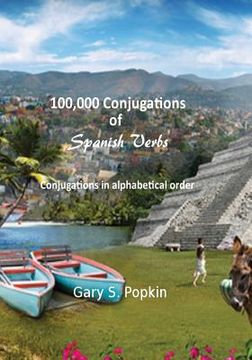
portada 100,000 Conjugations of Spanish Verbs: Conjugations in alphabetical order
Type
Physical Book
Publisher
Language
English
Pages
810
Format
Paperback
Dimensions
25.4 x 17.8 x 4.1 cm
Weight
1.38 kg.
ISBN13
9781502420473

100,000 Conjugations of Spanish Verbs: Conjugations in alphabetical order

Gary S. Popkin (Author) · Createspace · Paperback

100,000 Conjugations of Spanish Verbs: Conjugations in alphabetical order - Popkin, Gary S.

New Book Imported to New Zealand
Delivery: 04 Aug - 11 Aug Shipping: 5 to 6 business days.
NZ$ 93.44
Import costs and 15% GST included in the price ✅
NZ$ 93.44

Synopsis "100,000 Conjugations of Spanish Verbs: Conjugations in alphabetical order"

This book fills the gap left by Spanish-English dictionaries, Spanish verb books, and translation web sites. It lists more than 100,000 conjugations of Spanish verbs, and shows for each the infinitive, the subject, and the tense and/or mood as appropriate. There are several scenarios in which this book is needed: 1. Many verb conjugations have another meaning as some other part of speech, such as vino, estado, tienda, traje, una, helado, pueblo, and vestido, and are defined in most dictionaries and translation web sites as such. The reader can look up tienda and pueblo in this book and find these entries: tienda tender (Ud.) imperative; yo/Ud. pres. subj. andpueblo poblar yo pres. ind.2. A word may be a conjugation of a common verb and also of an uncommon one, for example asiste. The reader might recognize the word as a conjugation of asistir, and as meaning "she attends." But the word is also a conjugation of the verb asir, to grasp, and means "you grasped." The reader might not even know of the verb asir. The listing for asiste gives all its uses in both verbs: asiste (1) asir tú pret. (2) asistir Ud. pres. ind.; (tú) imperative 3. A reader encounters a word that is evidently a conjugation, but does not know which one(s), for example siente. This could be a conjugation of sentir or sentar, but which ones? The reader does not know siente has five meanings. Trying to find them using other means is difficult and time-consuming, and will probably miss one or more of the meanings. In this book, all the meanings are in one place, under siente.siente (1) sentar (Ud.) imperative; yo/Ud. pres. subj. (2) sentir Ud. pres. ind.; (tú) imperativeor thisvisto (1) ver pp. (2) vestir yo pres. ind.If the word you are looking for is not in your Spanish-English dictionary, look in this book. It has 100,000 more words.

Customers reviews

Frequently Asked Questions about the Book

All books in our catalog are Original.
The book is written in English.
The binding of this edition is Paperback.

Questions and Answers about the Book

Do you have a question about the book? Login to be able to add your own question.

Opinions about Bookdelivery

More customer reviews